Is My Child Ready for Preschool? 8 Signs to Look For
There is no birthday that flips a switch and makes a child "preschool ready." Some two-year-olds walk into a classroom and head straight for the blocks, while some three-year-olds need a few weeks of gentle goodbyes. Both are completely normal. If you are asking yourself, "Is my child ready for preschool?", this guide walks you through the signs we look for at The Little Butterflies in San Ramon and Pleasanton, what readiness does not require, and simple ways to help your little one prepare.
Is My Child Ready for Preschool? The Quick Answer
Most children are ready for preschool between 2½ and 4 years old. Readiness depends less on age and more on a few simple signs: your child can spend short periods away from you, shows interest in other children, can follow a simple instruction, and can communicate basic needs with words, signs, or gestures.
Your child does not need to know letters or numbers, be fully independent, or never cry at drop-off.
What Age Do Children Usually Start Preschool?
Many families start preschool between 2½ and 3½ years old, and children often continue through Pre-K until kindergarten. At The Little Butterflies, our classrooms grow with your child:
- Jr. Caterpillar (San Ramon): 18 months to 2½ years
- Caterpillar: 2½ to 3½ years in San Ramon, 2 to 3½ years in Pleasanton
- Butterflies (Preschool to Pre-K): 3 to 5 years
So the real question usually isn't "Is my child old enough?" It's "Is this the right next step for my child right now?"
8 Signs Your Child May Be Ready for Preschool
Your child does not need to check every box. Think of these as clues, not a test.
1. They can be apart from you for a little while
Maybe they stay happily with a grandparent, a sitter, or in a playgroup for an hour or two. A few tears at goodbye are fine. What matters is that they can settle and enjoy themselves once you have left.
2. They are curious about other children
Watching other kids at the park, wanting to join in, or copying what older children do are all signs your child is ready for a social setting. Sharing and taking turns come later, and preschool is where they are learned.
3. They can follow a simple instruction
"Put your shoes by the door." "Wash your hands." If your child can follow a short one- or two-step direction (at least some of the time), they are ready for the gentle routines of a classroom.
4. They can tell an adult what they need
Full sentences are not required. Pointing, a few key words, or signs for "water," "help," or "potty" help teachers understand and respond. If your child is still developing speech, let us know so teachers can learn your child's way of communicating.
5. They can enjoy short, focused activities
Can your child sit for a short story, a song, or a puzzle for a few minutes? Preschool days mix active play with brief, focused activities. A long attention span isn't required, just a little interest.
6. They are starting to do small things on their own
Trying to put on shoes, holding a cup, washing hands, or helping tidy up toys are small steps toward independence that preschool helps children build on.
7. They do well with a daily routine
Children with a fairly regular rhythm for meals and naps usually adjust faster to a classroom day. If your routine at home varies a lot, start nudging it toward a predictable schedule a few weeks before preschool begins.
8. They seem ready for more
Sometimes the clearest sign is boredom. If your child is asking "What's next?", wanting new activities, or craving more playmates, they may be ready for the variety a preschool classroom offers.
Preschool Readiness at a Glance
- 👋Short goodbyesCan spend a little time apart from you
- 👫Curious about kidsWatches, copies, or wants to join other children
- 👂Simple directionsFollows a one- or two-step instruction
- 💬Shares needsUses words, signs, or gestures to ask for help
- 🧩Short activitiesEnjoys a story, song, or puzzle for a few minutes
- 👟Little helperTries shoes, cups, handwashing, and tidying up
- 🕒Daily rhythmDoes well with regular meals and naps
- 🌟Ready for moreWants new activities and more playmates
A few of these signs is enough. Your child does not need all eight.
What Preschool Readiness Does Not Require
Many parents wait because of things that are not actually requirements for preschool readiness:
- Knowing letters, numbers, or colors. That is what preschool teaches.
- Never crying at drop-off. Tears in the first days or weeks are a normal part of adjusting. Read our guide on how to help your child adjust to a new daycare.
- Perfect sharing and turn-taking. These are social skills children practice in preschool.
- Being an outgoing child. Quiet, watchful children often thrive. They simply take a little more time to warm up.
How to Help Your Child Get Ready for Preschool
A few small habits in the weeks before preschool can make the first days much easier:
- Talk about preschool in a happy, simple way. "At preschool you'll paint, sing, and play with friends."
- Read picture books about starting preschool and talk about what the children in the story are doing.
- Practice short goodbyes. Leave your child with a trusted adult for short periods and always say goodbye. Sneaking out can make the next goodbye harder.
- Build a predictable morning routine. Wake up, breakfast, get dressed, and go, in the same order each day.
- Practice small self-help skills like washing hands, opening a lunch container, and putting on shoes.
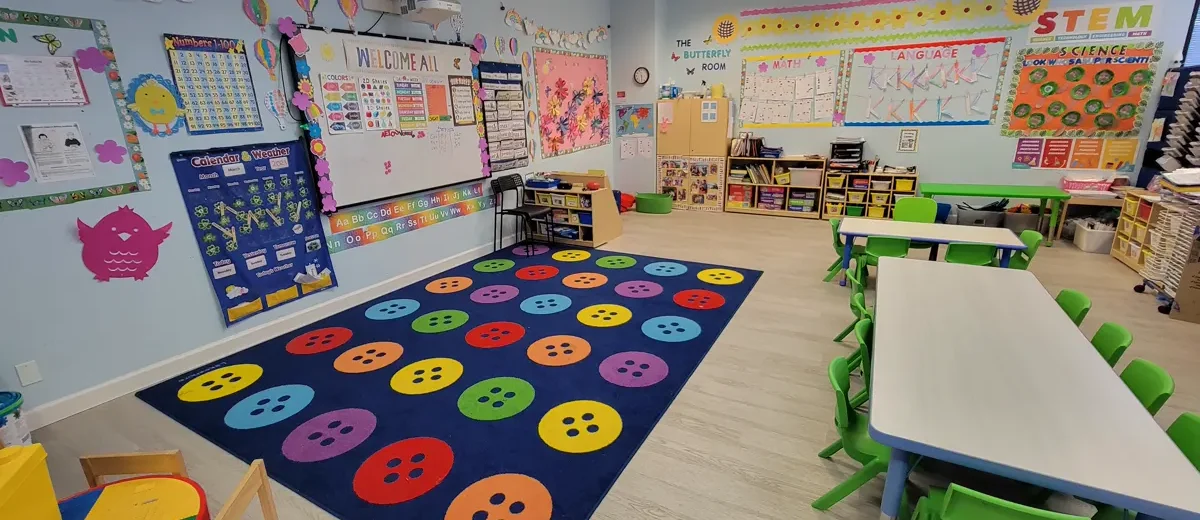
- Visit the center together. Seeing the classroom and meeting the teachers ahead of time turns "new and scary" into "I've been here before."
- Stay calm and confident at drop-off. Children pick up on our feelings, and a warm, steady goodbye tells your child, "This is a safe place."
What If My Child Isn't Quite Ready Yet?
That is okay. Readiness can change quickly at this age, sometimes within a few months. Some families start in a younger classroom like Jr. Caterpillar or Caterpillar, where routines are gentle and teachers help toddlers grow into preschool skills.
If you're unsure, the best next step is simply to visit. Our teachers can talk with you about your child and which classroom may be the best fit.
Preschool at The Little Butterflies
At our San Ramon and Pleasanton centers, preschool is about helping children feel confident, curious, and cared for. In our Preschool to Pre-K (Butterflies) program, children learn through:
- Hands-on experiences and creative play
- Social and emotional development, including making friends, expressing feelings, and building independence
- Early math, science, and STEAM activities
- Early literacy and writing, including the Learning Without Tears curriculum for our Pre-K children to prepare them for kindergarten
Parents receive regular updates and progress reports, so you always know how your child is growing. Explore our San Ramon Caterpillar classroom, Pleasanton Caterpillar classroom, or San Ramon Jr. Caterpillar classroom.
Still comparing programs? Read how to choose the right preschool and our guide to preschool vs. Pre-K vs. TK in California.
Ready to See If Preschool Is the Right Fit?
Visit The Little Butterflies to meet our teachers, explore the classrooms, and ask us anything about your child's next step.
Frequently Asked Questions About Preschool Readiness
What age should my child start preschool?
Many children start preschool between 2½ and 3½ years old. The right time depends more on your child's social, emotional, and communication readiness than on an exact age.
Is 2 years old too young for preschool?
Not necessarily. Some two-year-olds are ready for a toddler classroom. At our Pleasanton center, the Caterpillar classroom starts at 2 years old, and in San Ramon, the Jr. Caterpillar classroom starts at 18 months.
Does my child need to know the alphabet before preschool?
No. Letters, numbers, shapes, and colors are part of what children learn in preschool.
Is it normal for my child to cry when starting preschool?
Yes. Crying at drop-off is very common in the first days or weeks. With a consistent routine and warm, responsive teachers, most children settle in as they build trust.
How can I tell if my child is ready for preschool?
Look for signs like spending short periods away from you, showing interest in other children, following simple instructions, and communicating basic needs. Your child does not need to show every sign.
What if my child is shy?
Shy children often do very well in preschool. They may watch first and join in later, and teachers give quieter children time and gentle encouragement to warm up.
Trust What You Know About Your Child
No checklist knows your child better than you do. If your little one is showing a few of these signs, preschool may be a wonderful next step. If not yet, that's okay too. Every child blossoms in their own time.
Have questions? Contact us or call our San Ramon center at 925-428-5533 or our Pleasanton center at 925-215-7928. We'd love to meet your family.